Keep the source beside the answer.
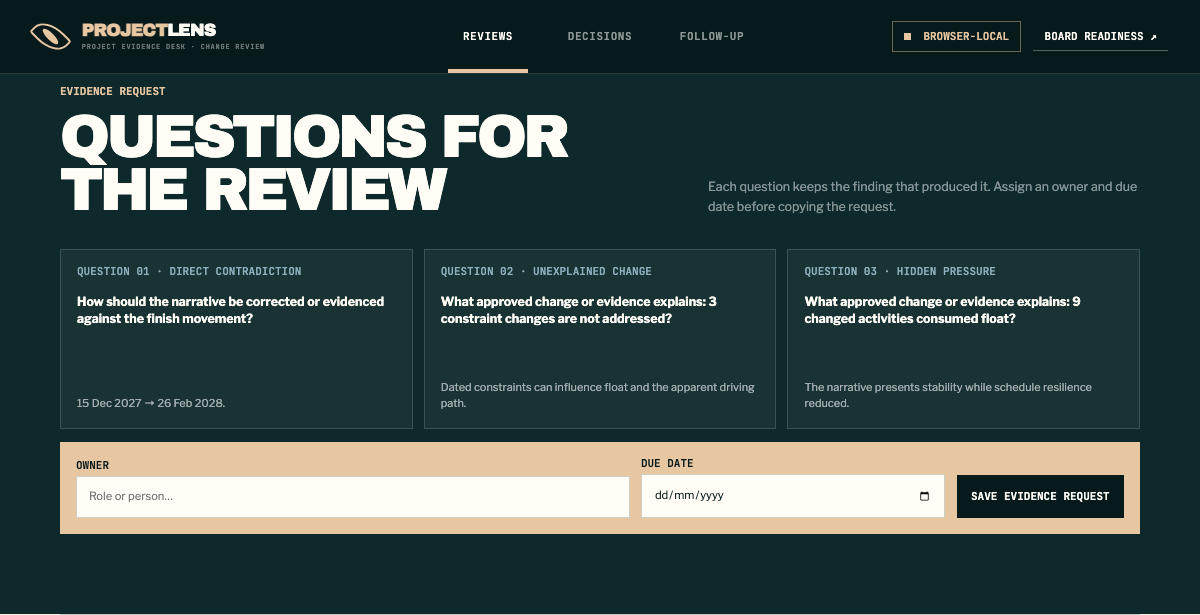
In ProjectLens, a reviewer can follow a schedule conflict back to the dates behind it. The sample helps them ask a better question; it does not tell them who caused the delay.
Follow the ProjectLens exampleI’m Matthew Paver, an AI solutions architect at Trustpilot through Ciklum. Seven years in data and AI took me from data analysis to solutions architecture. I still build the software.
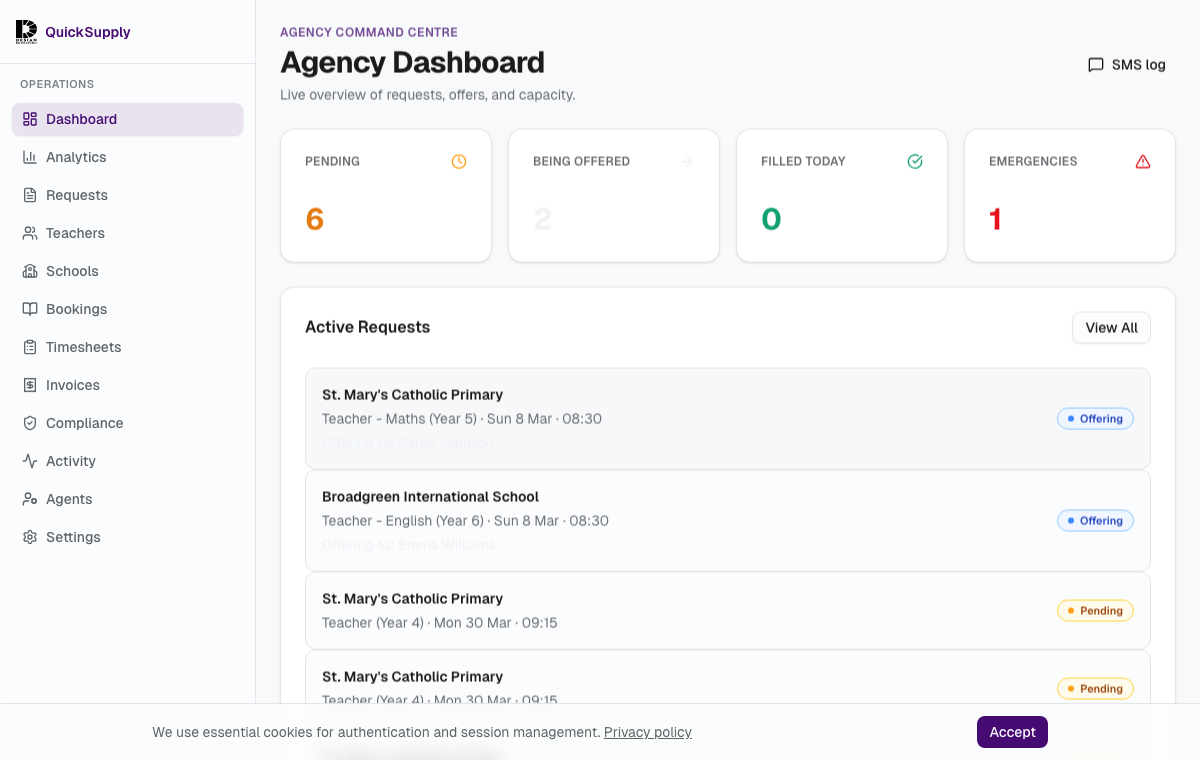
A school requests supply cover, an agency manages the request and assigns a teacher, and the teacher can review the assignment. The separate role-based dashboards share the booking status. This is a recorded case study, not a live staffing service.
Video unavailable. Download the recording or read the case study.
Independent projects you can inspect. They demonstrate my approach, not work delivered for an employer or client.
Could a permissions change give someone too much access?
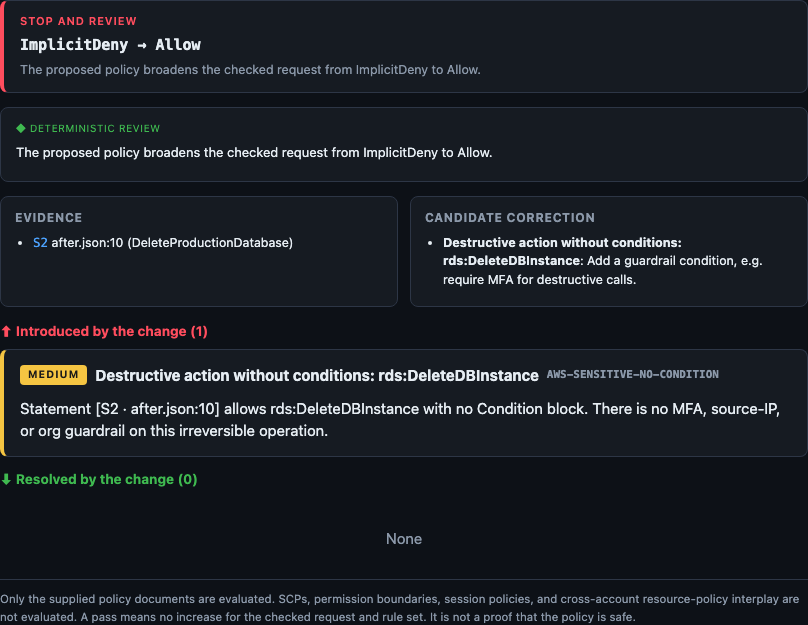
In the change-review example, a proposed permission allows deleting a production database. The reviewer can find the granting statement and test a correction.
Look for the explanation. It must agree with the code’s result and point back to the permission it checked.
Node.js · AWS IAM · AI evaluation
Does a proposed change match the project timetable?
I built a review screen that puts a change request beside the dates it relies on. A reviewer can spot differences and record follow-up questions.
Follow a question to its source. The example uses made-up schedules, so you can explore it without uploading company files.
Browser JavaScript · Python · Playwright

Who is arranging the teacher, and what happens next?
I started with an outdated Liverpool booking process. In this prototype, a school requests cover, an agency assigns a teacher and everyone can follow the booking.
Watch the handoff. The recorded demo follows a request through the separate school, agency and teacher views.
Next.js · TypeScript · Drizzle
I start with the decision someone needs to make, then test the part most likely to mislead them. Here is what that looks like in the work.
In ProjectLens, a reviewer can follow a schedule conflict back to the dates behind it. The sample helps them ask a better question; it does not tell them who caused the delay.
Follow the ProjectLens examplePolicyLens checks that an AI explanation agrees with the permission result and its cited source. These are authored test cases, not independent validation of every AWS rule.
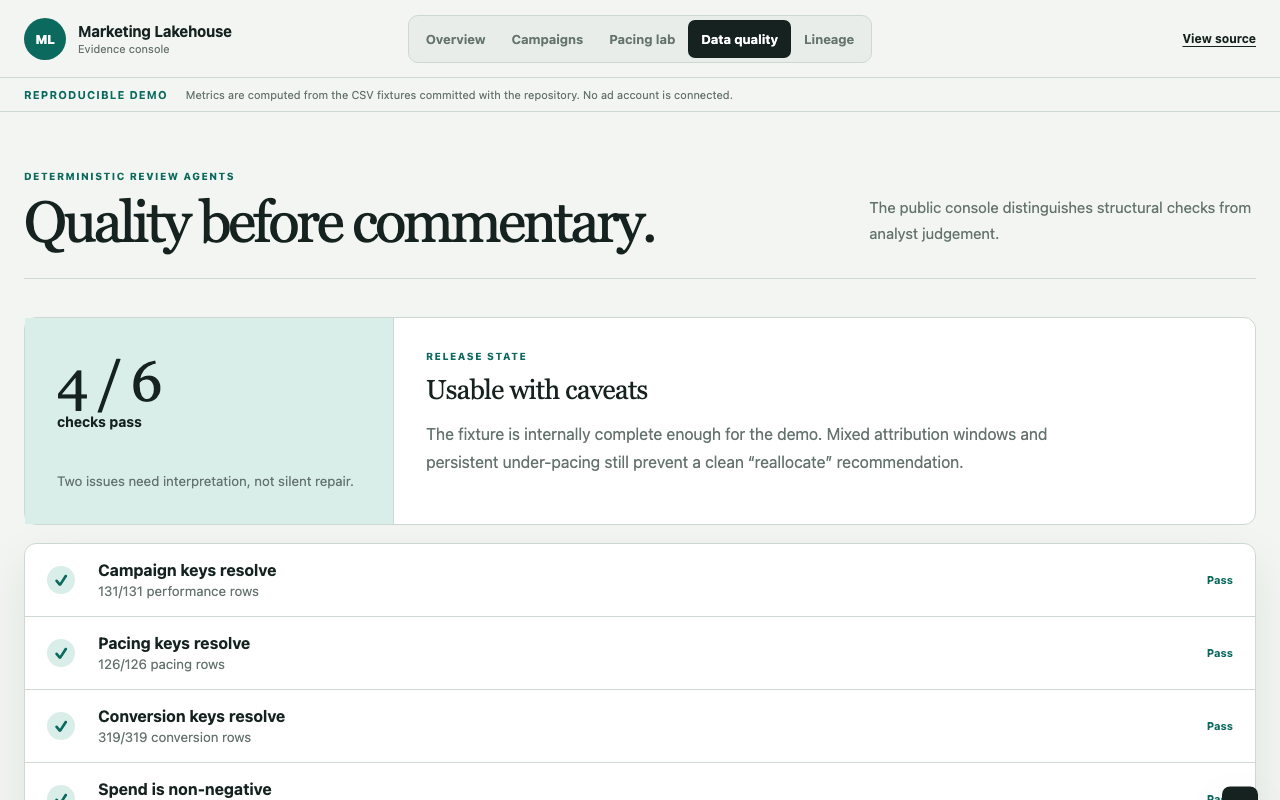
Inspect the PolicyLens checksFor the lakehouse’s next-day forecast, the comparison is using today’s figure again. I keep future records out of training and report when the model fails to improve on that baseline.
Read the lakehouse evaluationTry a tool, reuse a template or follow a product from problem to prototype.
Since November 2025 I have been an Automation & AI Consultant at Ciklum, placed at Trustpilot, where I lead AI and automation projects from discovery to support after launch. Before that I spent six years at Projecting Success, progressing from data analysis through data science into solutions architecture. That path still shapes how I work: understand the decision, check the data, build the system and explain it to the people who will use it.
My experience spans knowledge graphs, AI-assisted workflows and cloud automation, alongside release management, privacy reviews and technical training. I’m interested in what happens after a prototype works: who operates it, how it fails and how people stay in control.
These public projects are independent work. QuickSupply came from an outdated Liverpool supply-teacher booking process; Winchester came from my own property search. They make my engineering choices visible without exposing employer or client systems.